
Learn. Build. Succeed.
Your Welding Journey Starts Here.
Welcome to the American Welding Academy Blog — your source for welding insights, training tips,
student success stories, and industry news. Stay informed, stay inspired, and keep building your future one weld at a time.
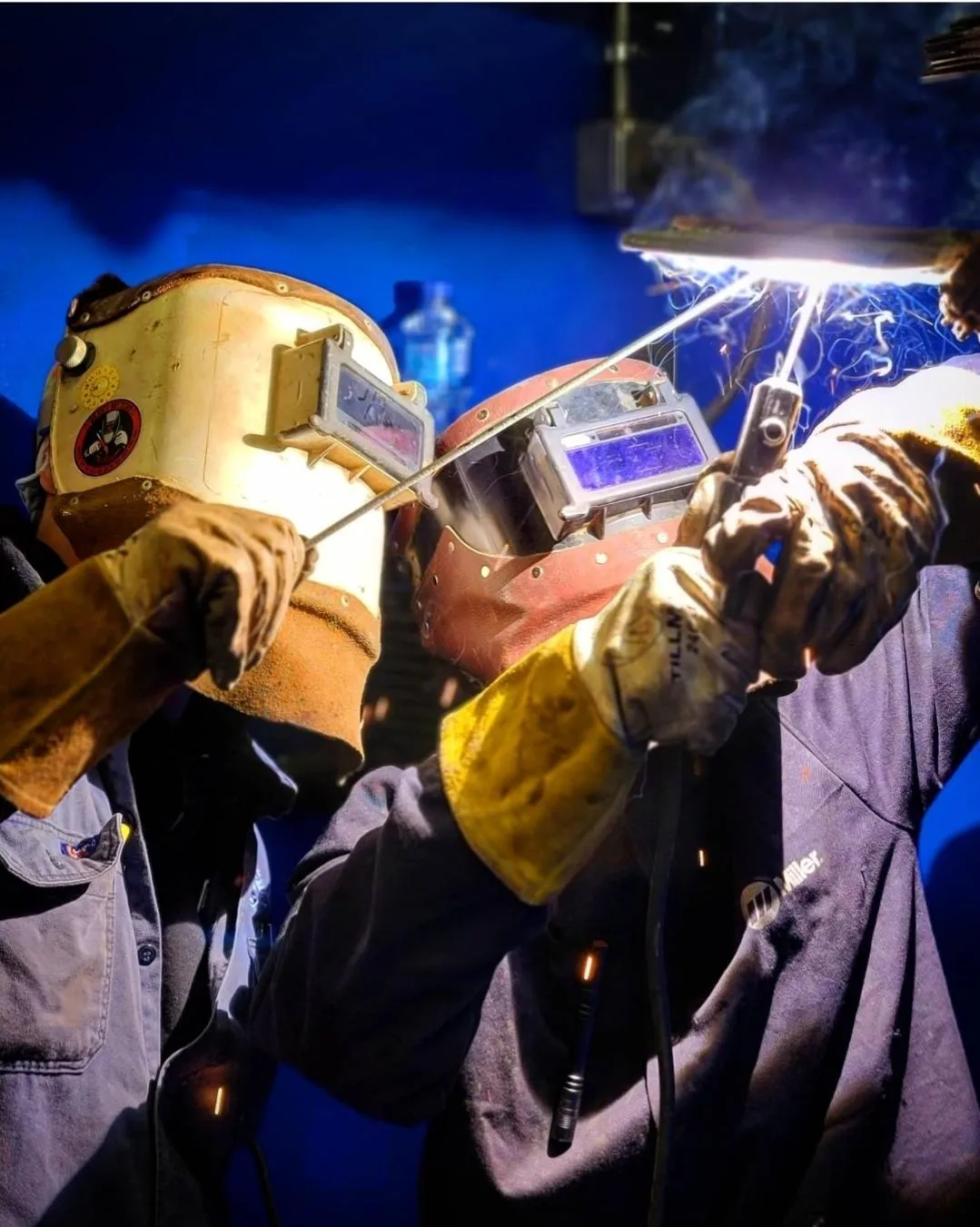
Precision Welding: Tolerances, Measurements, and Code Compliance
Precision welding sits at the intersection of craftsmanship, mathematics, and accountability. Professionals evaluate weld quality based on how closely it meets defined safety, performance, and longevity specifications, not merely on appearance. Precision welding requires welders to work within strict tolerances, apply accurate measurements, and follow established codes without exception. These expectations shape how welders think, plan, and execute every joint. Understanding why precision matters helps welders appreciate their role in producing components that perform reliably in real-world applications.

Tolerance Requirements for Quality Welds
Tolerances define acceptable variation in dimensions, alignment, and weld size. Even small deviations can lead to fit-up issues, stress concentrations, or inspection failures. They are requirements that must be met consistently to ensure structural integrity and proper function.
Welders learn to recognize how heat input, joint preparation, and travel speed affect final dimensions. Excessive distortion or uneven bead placement can push a weld outside allowable limits. Maintaining tolerance requires attention to detail from the initial layout through final inspection. Welders develop discipline and patience through precision welding, learning that quality is measured in fractions, not shortcuts.
Measurement Tools and Techniques That Support Accuracy
Accurate measurement is a foundational skill in precision welding. Tools such as calipers, micrometers, weld gauges, and squares help verify dimensions before, during, and after welding. Knowing how to use these tools correctly is just as important as owning them. A misread measurement can lead to costly rework or rejected components.
Precision welding also involves layout techniques that ensure parts are positioned correctly before welding begins. Proper fit-up reduces stress and improves consistency across multiple welds. Welders who value measurement understand that checking work early prevents problems later. This mindset builds confidence and reinforces accountability throughout the fabrication or assembly process.
Consistency, Repeatability, and Professional Standards
Consistency separates skilled welders from those who struggle under inspection. Precision welding demands repeatable results across multiple joints, shifts, or projects. Producing one acceptable weld is not enough. Welders must demonstrate the ability to meet the same standards every time, even when conditions change slightly from one setup to the next. That consistency is what turns “good enough today” into “dependable every day.”
Repeatability comes from controlled technique and disciplined habits. Welders who build a routine—checking fit-up, cleaning the joint, verifying parameters, and positioning comfortably before striking an arc—remove a lot of preventable variation. They also learn to read the puddle the same way each time, making small corrections early instead of trying to fix problems after defects form. Over time, these habits create welds that look and perform like they were made by the same steady hand, because they were.
Maintaining consistent travel speed, electrode angle, and heat input reduces variability. Precision welding teaches welders to approach each weld with the same level of focus, regardless of familiarity or time pressure. Employers value this reliability because it directly affects production efficiency and product quality. When welds are consistent, fewer parts get rejected, less time gets spent on grinding and rework, and schedules stay intact.
Quality Control Processes and Code Compliance
Precision welding workflows incorporate quality control at every step. Welders use visual inspections, dimensional checks, and non-destructive testing to verify that every bead meets code requirements. Rather than catching mistakes after the fact, these processes ensure compliance throughout production.
Code compliance requires welders to understand applicable standards and follow procedures precisely. This includes material specifications, joint design, and acceptable weld profiles. Precision welding reinforces the importance of documentation and traceability. Welders learn that following procedures protects both the end user and their professional reputation.
Precision Welding in Real-World Manufacturing Environments
Precision welding plays a critical role in manufacturing environments where components must fit together seamlessly and perform reliably over time. In sectors such as automotive, aerospace, and healthcare equipment manufacturing, tolerances and consistency directly affect safety, functionality, and regulatory compliance. Welders contributing to these environments must understand how their work integrates into larger systems.
Mastering welding techniques takes dedication, practice, and the right instruction. The skills you develop as a welder, precision, problem-solving, attention to detail, are valuable assets that will serve you in countless applications throughout your career. Don't leave your welding education to chance.
At the American Welding Academy, we equip our students not only with the skills and knowledge in precision welding, but also with real-world readiness that they can bring to real-world conditions. We offer expert instruction in a supportive learning environment designed to help you succeed. Explore our programs, connect with us online, or call (636) 800-9353 to learn more about enrollment, program details, and how AWA can help you launch a career that lasts.

Building careers in welding for over 20 years. Your future starts here.
Programs
Pipe Welding & Fitting
Fabrication Welding
Custom Classes
Programs
Contact Us
Copyright © 2025 All rights reserved The Welding Academy


