Learn. Build. Succeed.
Your Welding Journey Starts Here.
Welcome to the American Welding Academy Blog — your source for welding insights, training tips,
student success stories, and industry news. Stay informed, stay inspired, and keep building your future one weld at a time.
Advanced Pipe Welding Techniques You'll Master at AWA
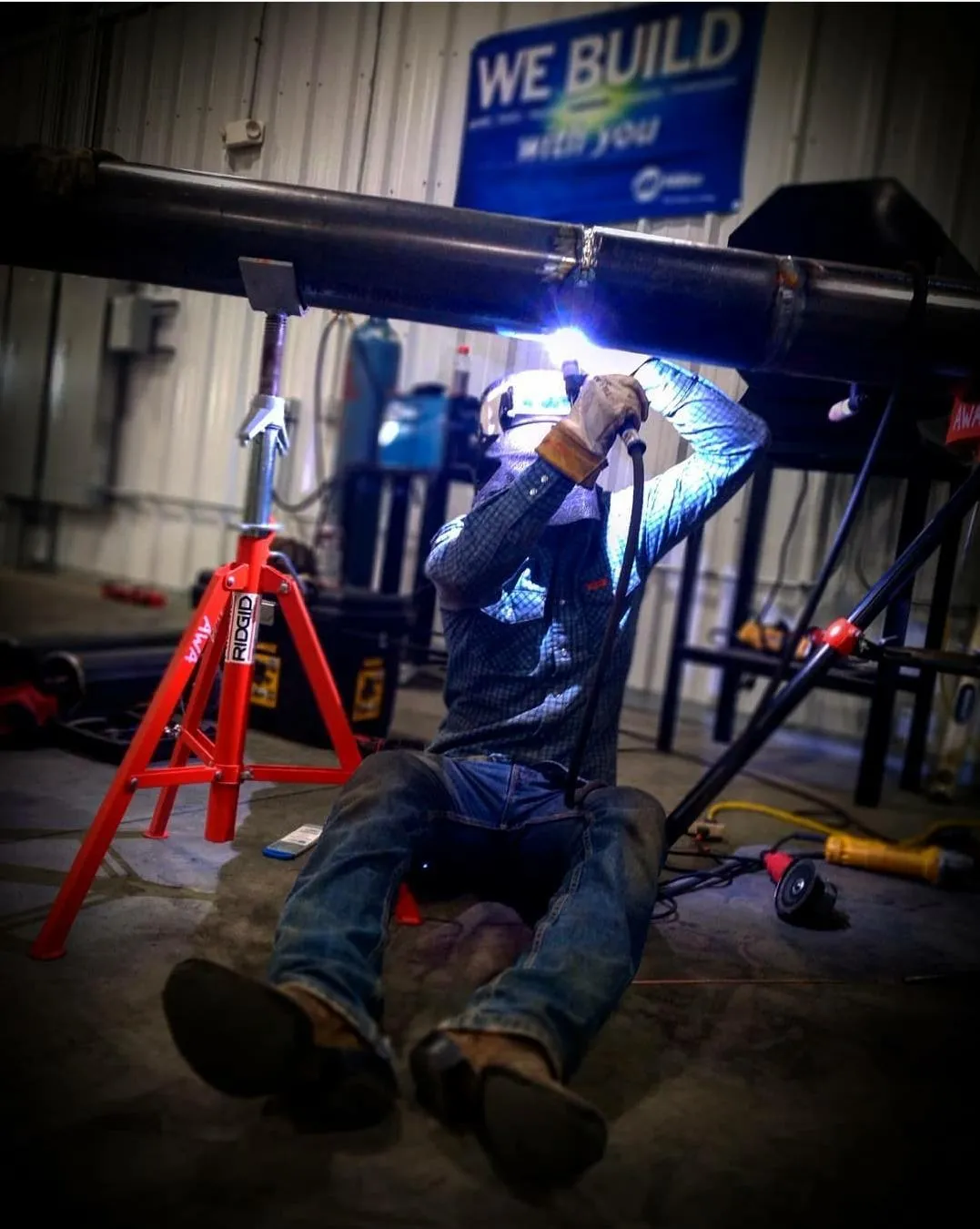
Pipe welding is one of the most demanding and respected skill sets in the welding trade. It requires precision, consistency, and the ability to perform under conditions that leave little room for error. From energy infrastructure to industrial processing and shipbuilding, pipe welding plays a critical role in keeping essential systems operating safely. For students moving beyond the basics, mastering advanced pipe welding techniques means learning how to weld in multiple positions, control the weld puddle through every pass, and meet strict industry codes. This progression takes time, discipline, and proper instruction grounded in real-world expectations.

Understanding Pipe Welding Positions: Horizontal, Vertical, and Overhead
Advanced pipe welding begins with position control. Unlike flat welding, pipe welds often require constant repositioning of the body while maintaining a consistent technique. Horizontal welding challenges welders to manage gravity without letting the molten metal sag or undercut. Vertical welding requires careful heat control, whether progressing uphill or downhill, to prevent excessive buildup or lack of fusion.
Overhead pipe welding is often the most intimidating for students. Gravity works directly against the welder, making puddle control critical for safety and quality. Mastery at this level comes from learning proper body positioning, rod angles, and travel speed. These techniques are essential in field environments where pipe cannot be rotated and welders must adapt to fixed positions.
Root Pass, Fill, and Cap Strategies That Meet Code Standards
Every high-quality pipe weld is built in stages, with each stage serving a specific purpose. The root pass establishes penetration and internal fusion, making it the foundation of the weld. A consistent root requires strong joint preparation, precise heat input, and steady movement to avoid defects such as burn-through or lack of penetration.
The fill passes build strength and thickness while maintaining proper bead placement. Poor fill technique can trap slag or create internal flaws that compromise integrity. The cap pass is the final visible layer and must meet visual inspection requirements while protecting the weld underneath. Advanced pipe welding training focuses on consistency across all passes, not just making a weld look good on the surface.
Pressure Vessel and Pipeline Industry Requirements
Pipe welds used in pressure vessels and pipelines must meet strict regulatory standards. These systems operate under high pressure and extreme temperatures, which means even small defects can lead to serious safety risks. Welders must understand applicable codes, such as those used in energy, manufacturing, and industrial construction sectors.
Advanced pipe welding instruction emphasizes joint design, material selection, and inspection readiness. Students learn how improper technique can lead to weld failure during testing or service. Understanding why these standards exist helps welders develop a mindset focused on safety, accountability, and long-term performance rather than speed alone.
Progressing From Fundamentals to Advanced Pipe Welding Skills
No welder begins with advanced techniques. Progression happens through repetition, correction, and honest evaluation of work. Foundational skills like proper fit-up, electrode selection, and heat control must be solid before advancing to complex pipe welding scenarios. As skills improve, welders learn to adapt techniques to different materials, diameters, and jobsite conditions.
Advanced pipe welding also requires mental discipline. Welders must stay focused for long periods, follow procedures, and accept feedback without defensiveness. This progression mirrors real job environments where consistency and attitude matter as much as technical skill. Training that reflects these realities prepares students for long-term success rather than short-term certification.
Build Real-World Pipe Welding Skills With Purpose
Advanced pipe welding is not about shortcuts or inflated promises. It is about earning competence through hard work and accountability. At the American Welding Academy, advanced pipe welding instruction is structured to mirror industry expectations. Students receive hands-on training in horizontal, vertical, and overhead positions, with close instructor oversight to ensure techniques meet code standards. We emphasize mastering root, fill, and cap passes through disciplined practice rather than rushing through exercises.
Instruction goes beyond technique alone. Instructors teach students the importance of work ethic, humility, and professionalism on the job. These traits matter when working on pipelines, pressure vessels, and critical infrastructure, where trust and accountability are essential.
For those ready to take the next step in the welding trade, American Welding Academy offers pipe welding and fitting programs designed to develop both technical skill and professional character. Explore our programs, connect with us online, or call (636) 800-9353 to learn more about enrollment, program details, and how AWA can help you launch a fulfilling career.

Building careers in welding for over 20 years. Your future starts here.
Programs
Pipe Welding & Fitting
Fabrication Welding
Custom Classes
Programs
Contact Us
Copyright © 2025 All rights reserved The Welding Academy


